
Your board sends the same scope to four HOA management companies in Prince George's County and gets back four proposals that look nothing alike. The instinct is to line up the monthly numbers and choose from there. What actually happened is that the four firms read your community differently, so those four numbers describe four different amounts of work.
Two boards a few miles apart can send the same request to the same four firms and get answers a world apart. One board runs a 1970s condominium inside the Beltway with a parking deck and a roof near the end of its service life. The other runs a 2015 townhome community in Bowie with a tot lot and a stormwater pond. Neither board is getting a better or a worse deal. They are buying different amounts of work.
Four factors carry most of that difference. One county requirement adds work here that boards in Howard and Montgomery never see. And six questions, asked of every firm in the same order, turn four proposals into something your board can actually compare.
Why HOA Management Company Costs Differ Across Prince George's County
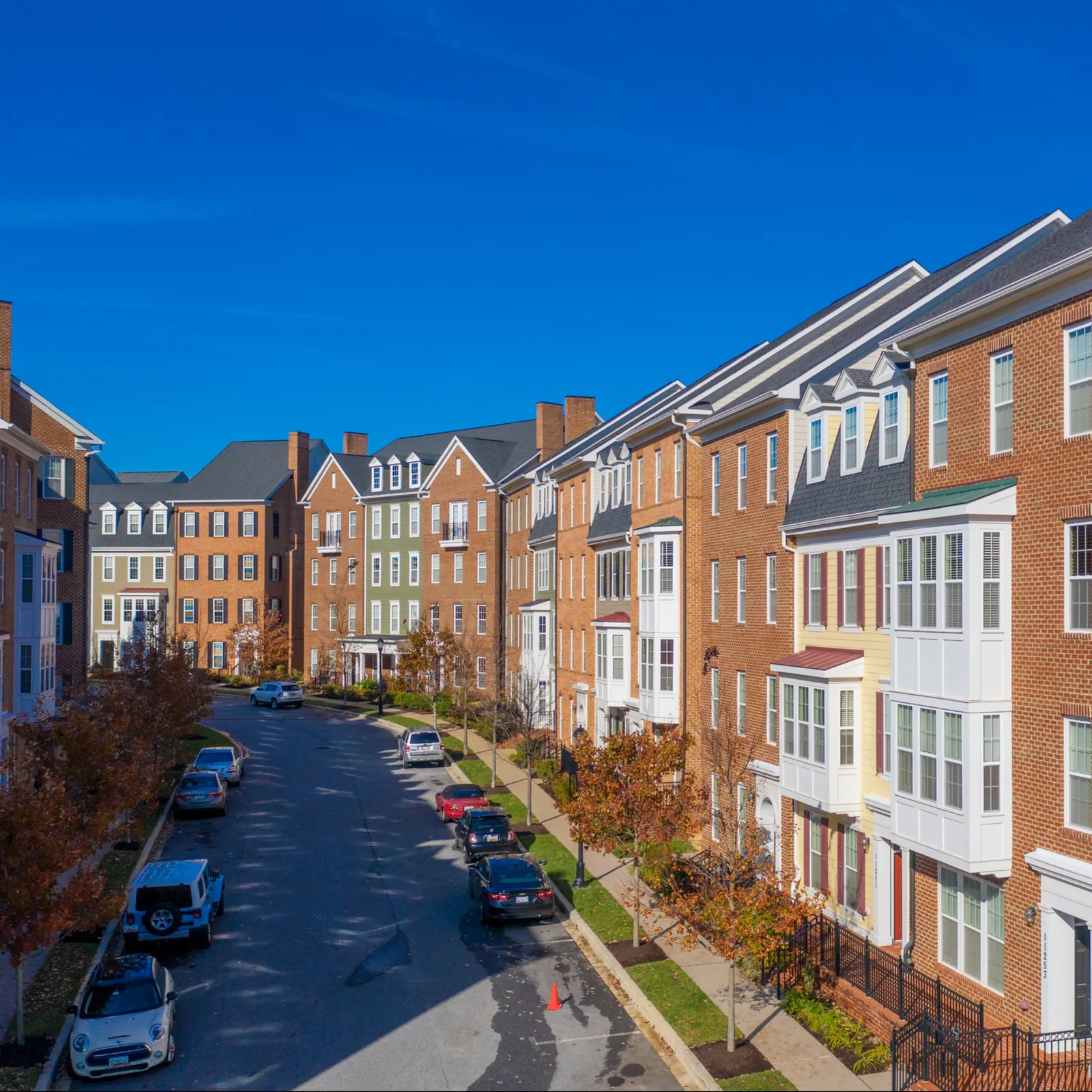
Prince George's County holds two housing markets inside one county line. Closer to the District, in Hyattsville, District Heights, and Suitland, you find condominium and townhome associations built in the 1960s and 1970s, carrying shared building systems, structured parking, and reserve plans that a major repair has already tested. Further out, around Bowie, Upper Marlboro, and Laurel, you find newer townhome and single-family communities where the common property is grounds, private roads, and amenities rather than building shells.
A homeowners association, or HOA, is the legal entity your community's owners belong to, run by an elected volunteer board. A management company is the outside firm the association hires to run daily operations. Your board keeps the legal authority and sets the policy. The firm carries out the work. How much of that work your community generates, and how hard it is, is the first thing separating one proposal from another.
We manage more than 4,000 properties and over $2 billion in assets across Maryland, and Prince George's County is one of the four counties we work in, alongside Howard, Baltimore, and Montgomery. That split between older condominiums and newer suburban HOAs is why two boards in the same county can open proposals that look unrelated.
Four Things That Move the Number on a Management Proposal
Unit count. A larger community spreads the same administrative work across more units, so a 40-unit association and a 400-unit association sit on different logic entirely. A board that compares its proposal to a neighboring community's is usually comparing across that line without knowing it.
Scope of service. Financial-only management covers assessment billing, collections, and monthly reporting. Full-service management adds vendor oversight, property inspections, covenant enforcement, board support, and resale document handling. Our guide to hiring a property management company in Maryland breaks those functions apart and gives your board the four fee categories to compare: set-up fees, ongoing fees, exit fees, and miscellaneous charges.
Amenity complexity and reserve maturity. A reserve study is an independent review of your community's common elements that projects when each one needs replacing and how much the association should set aside each year to pay for it. Maryland House Bill 107, enacted as Chapter 664 and effective October 1, 2022, requires the governing body of a Maryland cooperative housing corporation, condominium, or homeowners association to have a reserve study conducted of its common elements and to update that study at least every five years. A community carrying a pool, private roads, structured parking, or a stormwater facility without a current study is holding a cost that no proposal shows on its face.
Age and condition of the physical plant. Deferred maintenance turns into management hours. A roof past its service life generates bids, resident complaints, insurance correspondence, and special board meetings that a newer community does not generate at all. Your proposals will not say this out loud. The firm that walked your property before writing one has already priced it in.
The Prince George's County Requirement That Belongs in Your Proposal
Boards here answer to a county requirement that boards in Howard or Montgomery do not. Prince George's County requires every common ownership community to register with the Office of Community Relations each year. A common ownership community means a homeowners association, a condominium council of unit owners, or a cooperative housing corporation. The county runs that registration online.
The county sets the registration fee and the filing deadline, and the obligation belongs to your association whether or not your management firm handles the paperwork. Ask every firm you interview whether annual registration sits inside the base fee or gets billed on top of it. A board that assumes it is covered finds out in the year nobody files.
Document turnaround belongs in the same conversation. Under the Maryland Homeowners Association Act, Real Property Title 11B, your association has 20 days from a written request and payment of the fee to produce a resale package, which is the disclosure set an owner needs in order to sell. A firm that produces those inside the window is absorbing work your volunteers would otherwise carry on a deadline set by statute, during the week somebody's settlement is scheduled.
Six Questions to Ask Every Firm, in the Same Order
Run this list in every interview, in this order, so the answers line up side by side.
Break the proposal into the same four fee categories. Set-up, ongoing, exit, and miscellaneous. A proposal that reports one monthly number and goes quiet on the other three is incomplete, and the quiet categories are where boards get surprised.
Ask whether county registration is included. Annual common ownership community registration with the Office of Community Relations, inside the base fee or billed separately.
Ask what triggers a charge outside the base fee. After-hours calls, special assessment administration, violation follow-up, capital project oversight, and legal coordination.
Ask about the reserve study. Who updates it, on what schedule, and how the firm builds the funding recommendation into your annual budget.
Ask about local vendors. A firm with roofers, paving crews, and stormwater contractors already working in Prince George's County gets bids back faster than a firm routing your community through a national vendor network.
Ask how the transition runs, if you are switching. A well run handoff follows a known sequence, and our 60-day HOA management transition checklist lays out notice, records transfer, vendor handoff, and resident communication week by week.
Write the answers down as you go. Six weeks later, when your board votes, the notes are what stop the decision from turning on whoever interviewed most recently.
Frequently Asked Questions
What determines HOA management company cost in Prince George's County, Maryland?
Unit count, scope of service, community age, amenity complexity, and the maturity of your reserve plan determine it. A 400-unit condominium with structured parking and an aging roof carries a different workload than a 40-unit townhome HOA with grounds and a tot lot. The right number depends on your community, so book a consultation and we will show your board what moves it.
Does Prince George's County require HOAs and condo associations to register with the county?
Yes. Prince George's County requires every common ownership community, meaning a homeowners association, a condominium council of unit owners, or a cooperative housing corporation, to register with the Office of Community Relations each year, and the county runs that registration online. The county sets the fee and the filing deadline, so confirm both with the Office of Community Relations and ask your management firm whether the filing sits inside its base fee.
What drives HOA management fees up or down in Prince George's County?
Community size, scope of services, amenity complexity, and reserve maturity drive them, rather than the county line itself. Adding vendor oversight, inspections, and covenant enforcement to a financial-only scope raises the workload. Growing from 40 units to 400 spreads administrative work across more owners, which moves the logic in the other direction.
Does our association need a reserve study, and how does it affect what we pay?
It needs one. Maryland House Bill 107, effective October 1, 2022, requires Maryland condominiums, cooperatives, and homeowners associations to have a reserve study conducted of their common elements and updated at least every five years. A board without a current study is asking firms to price work nobody has scoped yet, which is why those proposals come back furthest apart.
Our board is unhappy with its current manager. Where does the cost conversation start?
It starts with your existing management agreement, because the exit terms and notice period set your timeline before anything else does. Pull that agreement and your most recent reserve study before you invite anyone to propose. A board that walks into four interviews holding both documents gets four proposals built on the same facts.
Compare the Work, Then Compare the Proposals
What an HOA management company in Prince George's County costs comes down to knowable things: unit count, scope, amenity complexity, reserve maturity, and the county compliance work that comes with every association here. A board that asks all four firms the same questions in the same order ends up comparing the work rather than guessing at the number. That board can also defend the decision to residents three years later, because the criteria went on paper before the proposals arrived.
Talk to a Prince George's County HOA Manager
Bring us your current management agreement, your most recent reserve study, and the two things that frustrate your board most. We will tell you straight what your community needs managed and what we would change first. Book a consultation with West Property Management.
References
Maryland General Assembly, House Bill 107 (2022 Regular Session), Chapter 664, Cooperative Housing Corporations, Condominiums, and Homeowners Associations - Reserve Studies - Statewide — supplies the statewide reserve study requirement, the five-year update cycle, and the October 1, 2022 effective date.
Prince George's County Office of Community Relations, Registration of Community Associations — supplies the annual registration requirement and the online filing process.
Maryland Homeowners Association Act, Real Property Title 11B, section 11B-106 (compiled text via Calvert County, Maryland) — supplies the 20-day resale package deadline.
Cost drivers, interview questions, and transition sequencing in this guide come from West Property Management's own work with Maryland boards, and link to our published guides rather than to outside firms.
About this piece
West Property Management manages homeowners associations and condominium associations across Howard, Baltimore, Prince George's, and Montgomery counties, as part of more than 4,000 properties and over $2 billion in assets. We sit on the other side of this comparison several times a year, including with boards that choose a different firm. The county and state requirements above are cited to Maryland law and to Prince George's County's own offices so your board can verify each one before signing anything.